

“Imagine you have a tech revolution like AI, and you have a set of old companies doing things the old way, and you have a set of new companies doing the new thing. The reality is, the old way is not the AI way. The reality is the AI way of doing it is entirely different. You never want to bet against your own portfolio, but the reality of them actually being competitive is very low.”
– Martin Casado, General Partner at Andreessen Horowitz on Uncapped
“They not like us, they not like us, they not like us”
AI-first, AI-enabled, AI-native - every company is scrambling to convince anyone who will listen that they are on top of the current technological revolution. The exponential is not leaving them behind; they’re reading the blogs and X posts, making the hires, they’ve been “doing AI” for years.
The problem is that the current pace of technological progress means our traditional view of who is an “incumbent” or a “legacy company” needs to change. We used to think of legacy companies as decades or centuries old, depending on the industry. Now a legacy company is any company that launched before the ChatGPT-era, November 30, 2022.
I call this class of pre-2022 companies “AI-encumbered.” It’s easy to separate AI-native companies from AI-encumbered company theatrics once you know what to look for:
AI-native companies have a value proposition that was impossible to state before 2022, and impossible to actually deliver on before 2025. If a company needs to say “built with AI,” or even reference AI to explain its value proposition, it’s probably not AI-native.
Companies that launched before 2022 and grew quickly1 - 3 people can pivot, 30 people will face organizational inertia. Larger orgs have a pre-AI DNA that is incompatible with being AI-native.
If a company is not AI-native in its vertical, it will very loudly and repeatedly declare that it is, rather than letting the evidence speak.
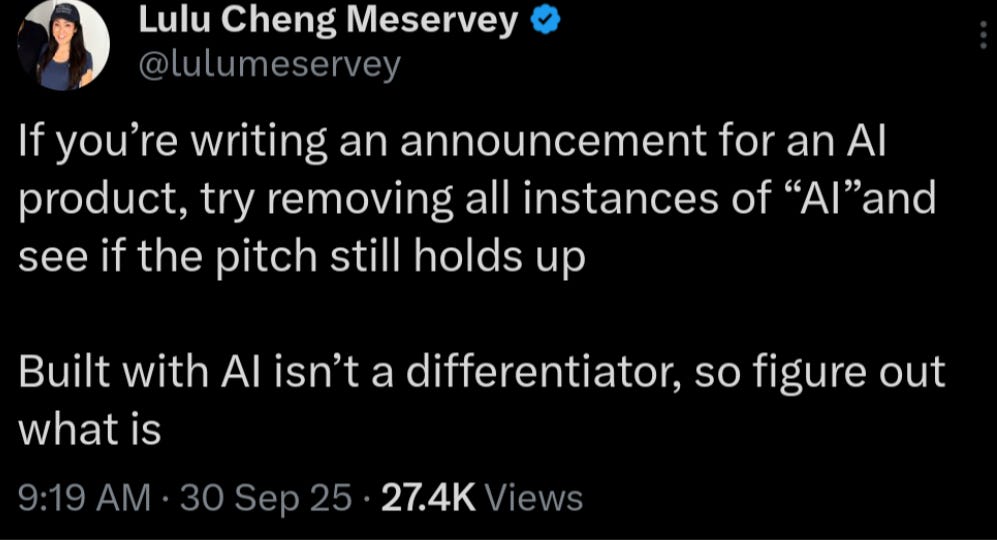
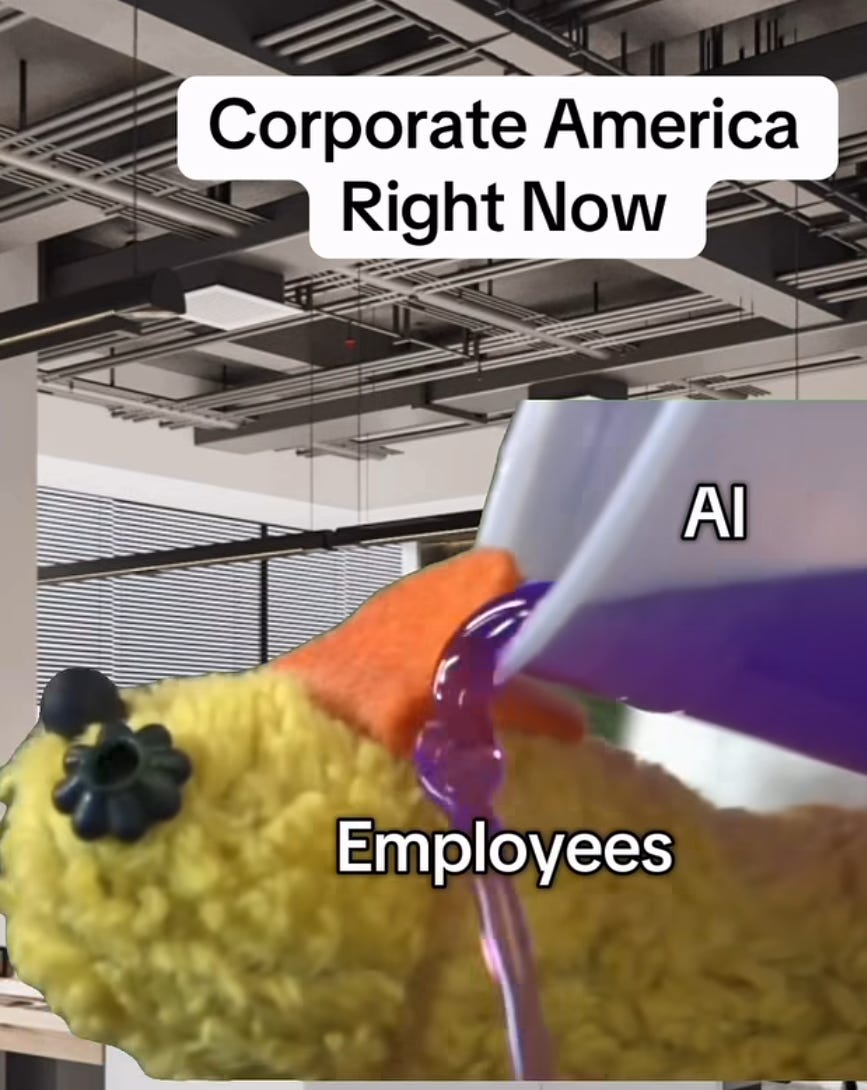
These companies are encumbered with “stakeholder” expectations to layer on, inject, and infuse every aspect of the business with AI. They are encumbered with mandates to “use AI”, as if using AI causally boosts productivity. Most of these companies are far from showing any positive impact of AI adoption on their business (which might qualify them for an “AI-enabled” moniker). The incredible thing is that AI-encumbered companies are being dragged down by the overwhelming push to adopt AI.
You might be a prospective employee, trying to vet a company or team’s claims about being “AI-native”, or an investor doing the same, or a founder or executive in a moment of introspection, wondering what to do. Understanding what kind of company you’re building, joining, or investing in is essential for making the right choice.
Examples abound - AI-native startups like Harvey built from scratch, while traditional firms attempted to use AI and got fined for fabricating cases. MIT’s NANDA initiative reported that 95% of enterprise GenAI pilots failed to increase revenues. That’s probably unsurprising if you work in an AI-native company, and horrifying if you don’t.
“The 95% failure rate for enterprise AI solutions represents the clearest manifestation of the GenAI Divide,” the report states. The core issue? Not the quality of the AI models, but the “learning gap” for both tools and organizations. While executives often blame regulation or model performance, MIT’s research points to flawed enterprise integration.
Traditionally, it takes legacy players a long time to understand and adopt new technology, and that creates inefficiencies in the market that can be exploited by newer or more agile players. AI is showing us what happens when everyone clamors to adopt new technology before innovators understand how to use it and build with it.
The result is “workslop” - AI-encumbered companies are forced to produce something, anything with AI, and that means walls of text, memos, slides, spreadsheets, mandatory trainings, and layers and layers of unnecessary process zipping back and forth between teams.
Workslop takes the idea of “AI slop” found on social platforms and applies it to things like shoddy reports and slides made by gen-AI with minimal effort from the human who yawned deeply before feeding the information into their robot coworker.
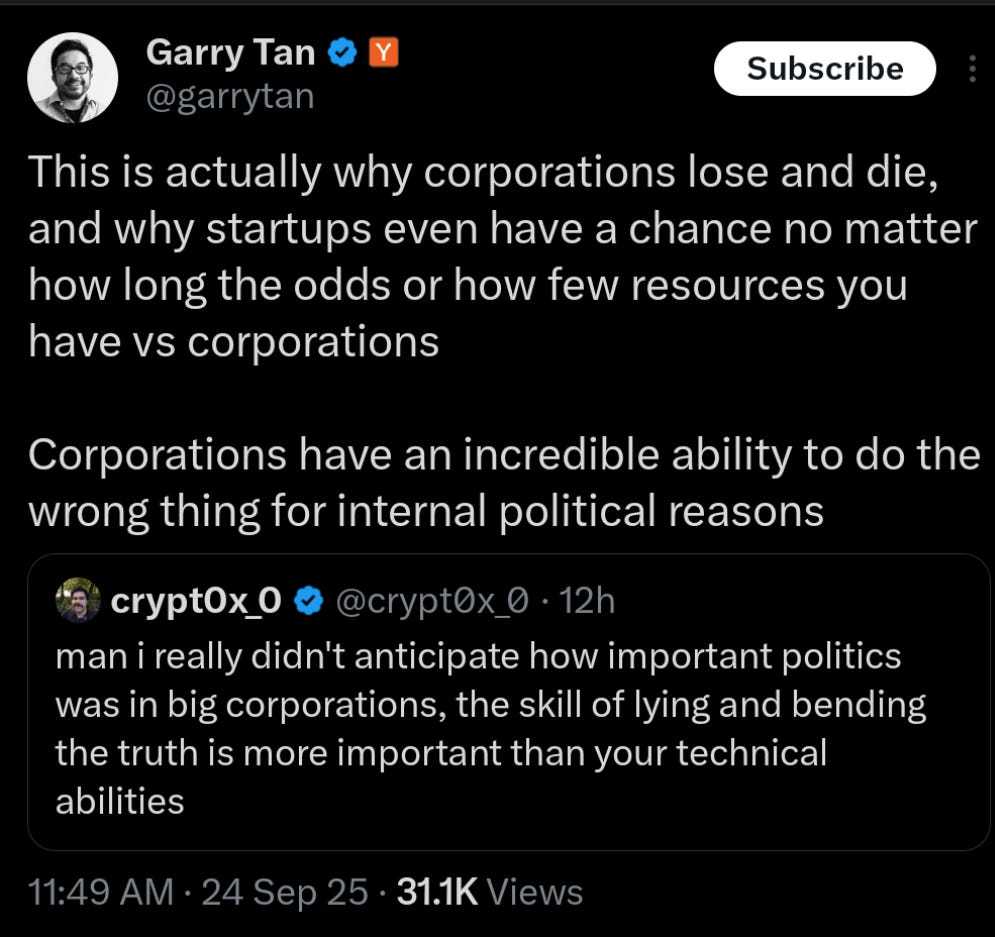
Large and legacy organizations are enthusiastically self-sabotaging with AI and there’s no way out, because their existing structures and incentives cause them to use these incredibly powerful new tools to create new forms of dysfunction. The incentives to put on an “AI-enabled” facade are so strong, AI-encumbered companies will drown in AI-generated content that nobody reads, but everyone feels compelled to produce. As the tools get better and the AI-generated emails, decks, and reports look more superficially convincing, this self-sabotage will accelerate.
Are there any historical parallels? AI certainly feels unique, although history teaches us that we are never really in a special moment. AI is unique compared to previous technology revolutions for three reasons: 1) it is easier to deploy than anything before it (go to chatgpt.com, done); 2) every decision maker in every large and legacy organization is immersed in AI news and infected with fear of being left behind; and 3) AI is the highest leverage technology humanity has ever created. With this combination of factors, AI-encumbered companies are amplifying their existing dysfunctions at unprecedented scale2.
To borrow everyone’s (least) favorite LLM turn of phrase: “it’s not that AI-encumbered companies can’t adapt, it’s that they’re actively making themselves worse through enthusiastic misuse.”
This creates an internal conflict for AI-encumbered orgs - leaders are under simultaneous and diametrically opposed pressures: 1) to reduce headcount because AI should make everyone more productive; and 2) grow team size commensurate with their AI proficiency and power within the organization.
Sophisticated operators and investors understand that AI-encumbered vs AI-native is a one-sided rivalry. AI-encumbered companies are trying to position themselves as competitors to the current crop of AI-native companies, but they’re operating in a completely different mode. AI-encumbered companies need to maintain backwards compatibility with old ways of working, hiring, and organizing teams. They need predictable, risk-free improvements to existing products. But building natively with AI is extraordinarily messy and chaotic and powerful, which is gold for truly AI-native companies, and poison for everyone else.
Getting in touch
If you liked this post or have any questions, feel free to reach out over email or connect with me on LinkedIn and X / Twitter.
Acknowledgements
Thanks to Stephen Malina and Aris Theologis for reading early drafts of this post and providing helpful feedback.
The obvious counter to this are major tech companies that are rewiring to become AI-enabled, adding AI features to existing products.
The closest parallel is email and modern enterprise communication tools (Teams and Slack). They were harder to deploy and took longer to penetrate the market, decision makers weren’t nearly as worried being left behind on email or Teams usage, but there was a “workslop” effect where these technologies enabled institutional noise pollution and trust degradation.
For too many companies and institutions, their real competition isn't even on their radar screens. AI exacerbates the situation for them. It is a new day!